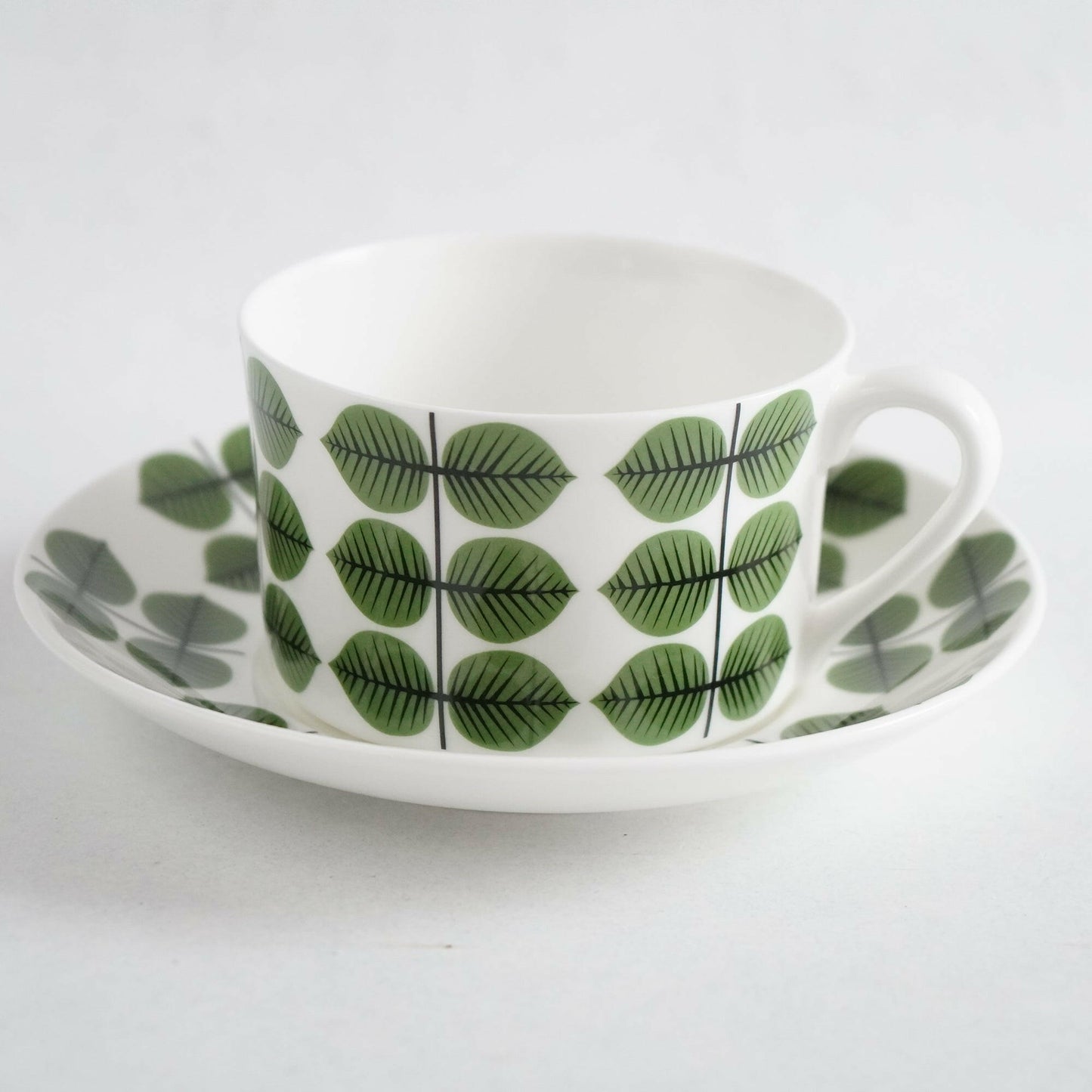
北欧の新緑を一杯のお茶に リンドベリの代表作ベルサ
■ Product Description A classic Bersa tea cup and saucer from Gustavsberg, a long-established Swedish tableware maker representing Sweden. Designer Stig Lindberg created this leaf pattern in 1961 and built the golden age of Nordic tableware called mid-century. Bersa is very popular in Sweden, and it is no exaggeration to say that it is a national design.
Bersa (besho, bell show) means gazebo, and it is a space set up to take a break in a corner of a park. In Scandinavia where winter days are long, this design is for a spring day where you can always feel the fresh greenery.
■ Details Manufacturer: Gustavsberg / Gustavsberg Series: Bersa / Bersa Designer: Stig Lindberg / Stig Lindberg Age: Reprint
■ Size Height 7 cm Diameter 10 cm Saucer diameter 16.5 cm
■ Capacity: 200ml
■Condition:
Parallel import goods (unused goods). We have multiple items in stock. There are differences in the thickness, thinness and position of the back stamp depending on the product. In addition, because it reproduces the mid-century pottery method, you can see burnt grains even if it is brand new. If you would like individual photos, please contact us via message.
Also, from 2019 onwards, Gustavsberg reissues no longer have the date stamped under the anchor mark. Since this product does not have an era name, it will be manufactured after 2019.
About Stig Lindberg

Stig Lindberg (1916-1982)
Lindberg was born in Umeå, the central city of northern Sweden, and graduated from the Konstfack (University of Fine Arts) in Stockholm. Konstfack) to study painting. In 1937, he joined Gustavsberg and studied under his teacher, Wilhelm Koge, and 12 years later, in 1949, he succeeded Koge as the company's art director. Since then, Lindberg has produced numerous works as a flag bearer of Swedish modernism in the middle of the 20th century. The Gustavsberg workshop in the era when Lindberg was active has reached its heyday, and even now the works of that time are recognized as works of the golden age called "mid-century" and have high value. Lindberg's studio was called G-Studion, and young painters showed their skills. Lindberg retired in 1980 and opened a workshop in Italy where he retired, but died there two years later.